

Giardino All’Oscuro
Davide Rivalta

A conversation between Davide Rivalta and Miral Rivalta
The title of this exhibition is taken from Pia Pera’s book Al giardino ancora non l’ho detto, inspired by Emily Dickinson’s poem I have not told my garden yet. The author, who is also the protagonist of her own narrative and is affected by ALS, suggests through her physical experiences and struggles during the months of illness that one day the gardener (herself) will no longer keep the appointment with the place she has shaped. Page after page, she becomes increasingly aware of her condition, knowing that one day she will be forced to abandon her garden. As her illness progresses and prevents her from caring for it as she wishes, the park changes in parallel.
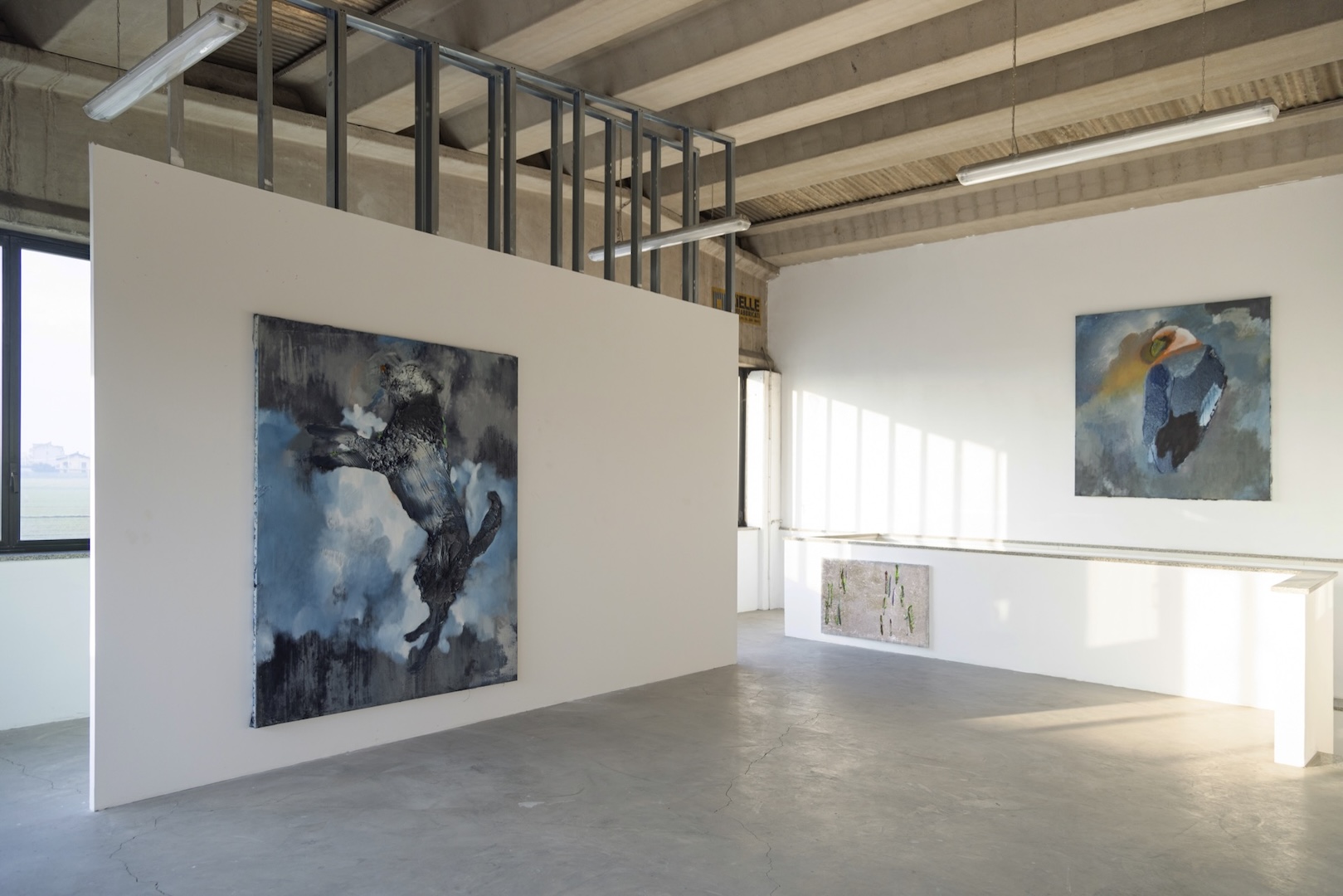
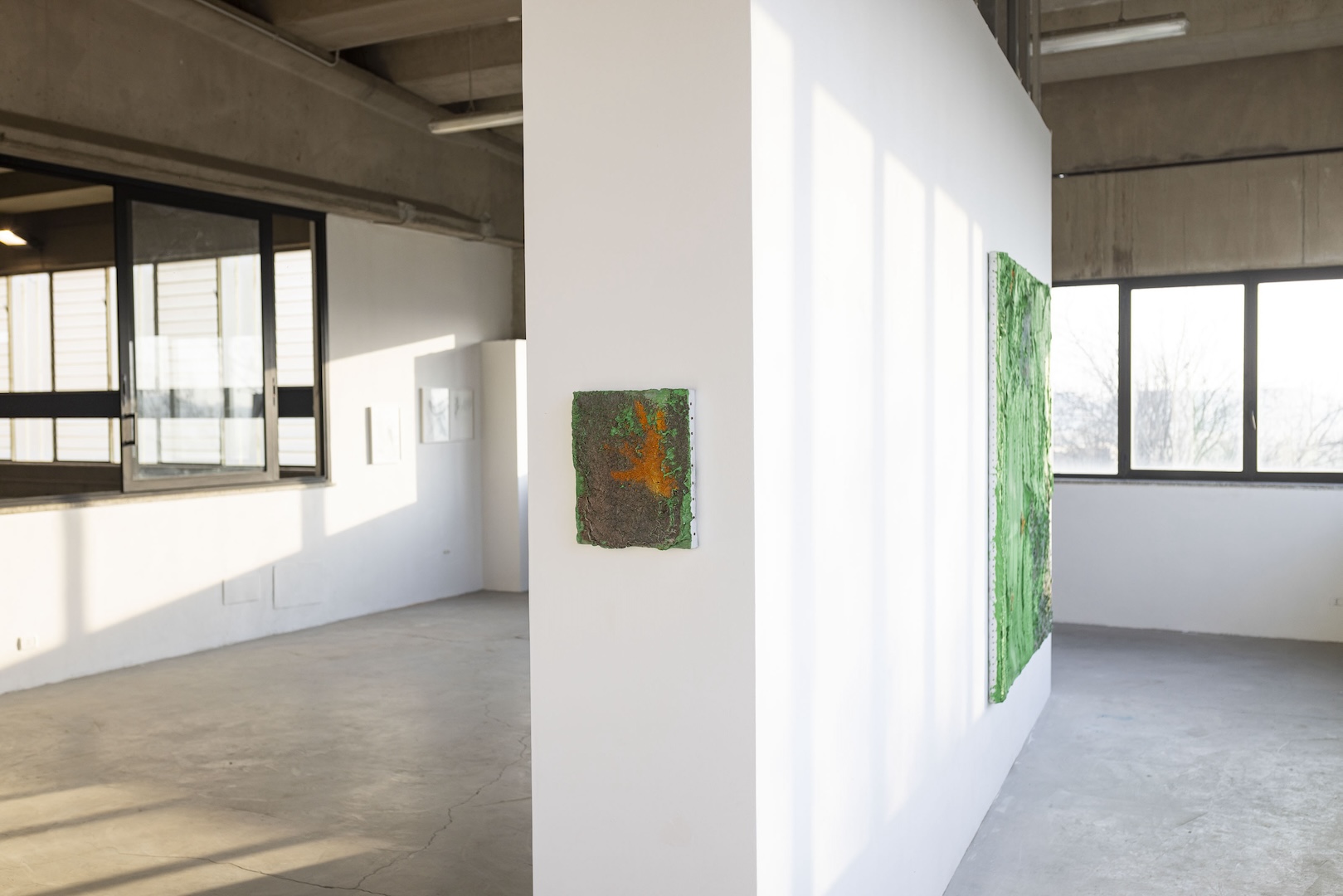
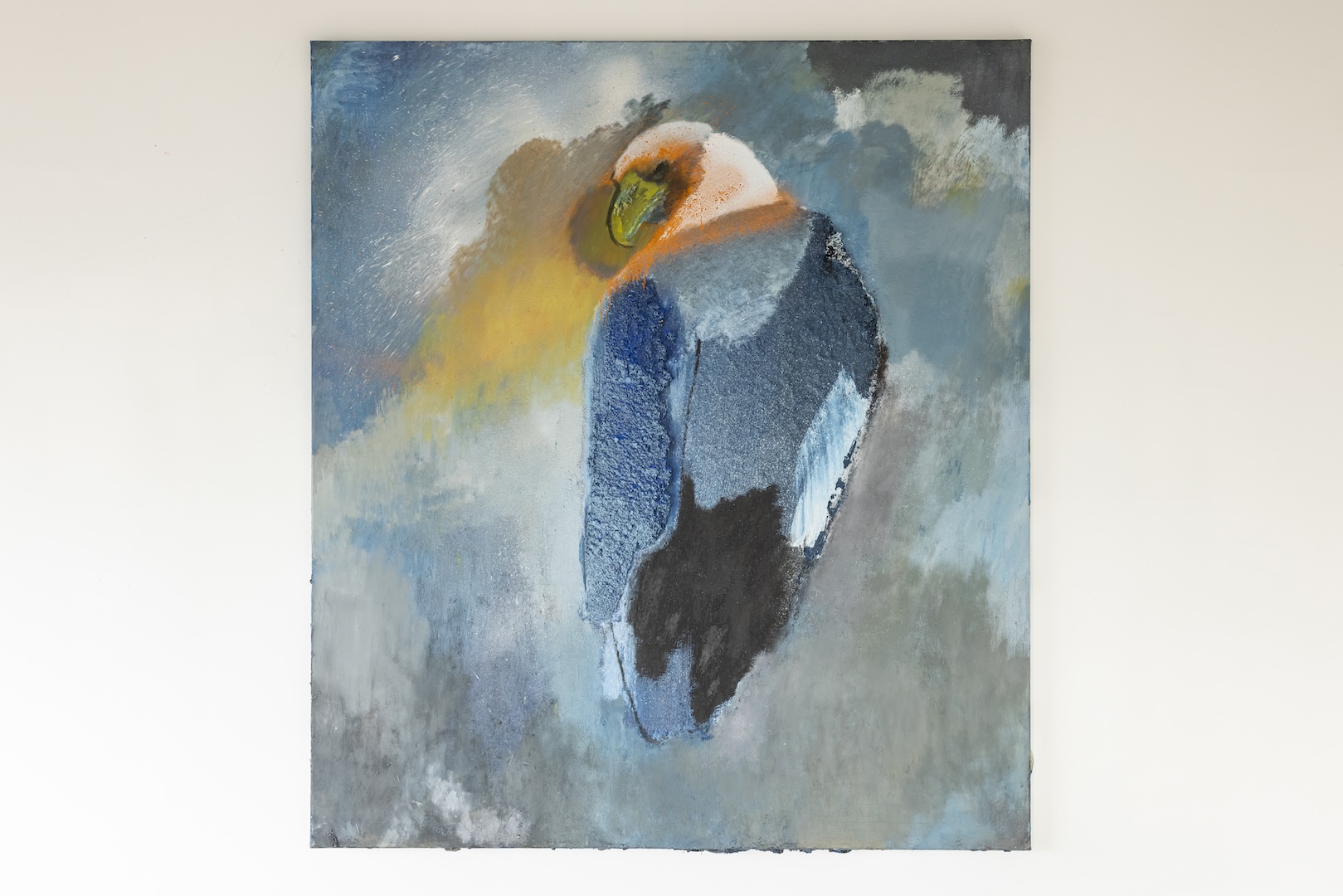
In these months, another garden will take over the spaces of Fuocherello — that of Davide Rivalta. While reflecting on this exhibition and on what to write about it, after years of working alongside my father, I can say I know by heart the detailed monologue about his poetics and sculptural practice that I tell the press, collectors, and colleagues. Despite this, and my personal preference for his pictorial work (in fact, the only piece of his I own is a large painting depicting an eagle), I realize I know very little about the origin of these works. So, one afternoon, while we were both sitting at the desk in the office of the Fonderia Artistica De Carli, I took advantage of a particularly calm moment at work to ask him a few questions and find out where his painting comes from.
D: When I was working on the sculpture of the first Indian rhinoceros, I used clay dust that created a myriad of shades and colors on the surface of the sculptures. I thought the same process could be applied to painting using pigment powder.
M: One of the most distinctive and recognizable features of your work is the physicality with which you approach matter.
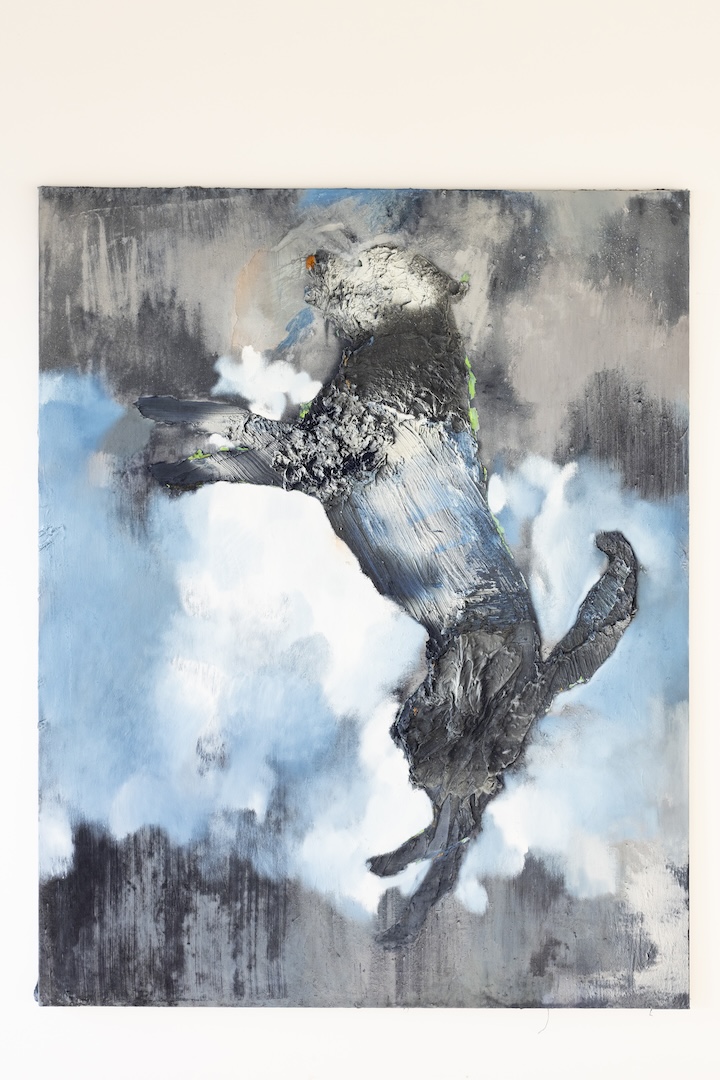
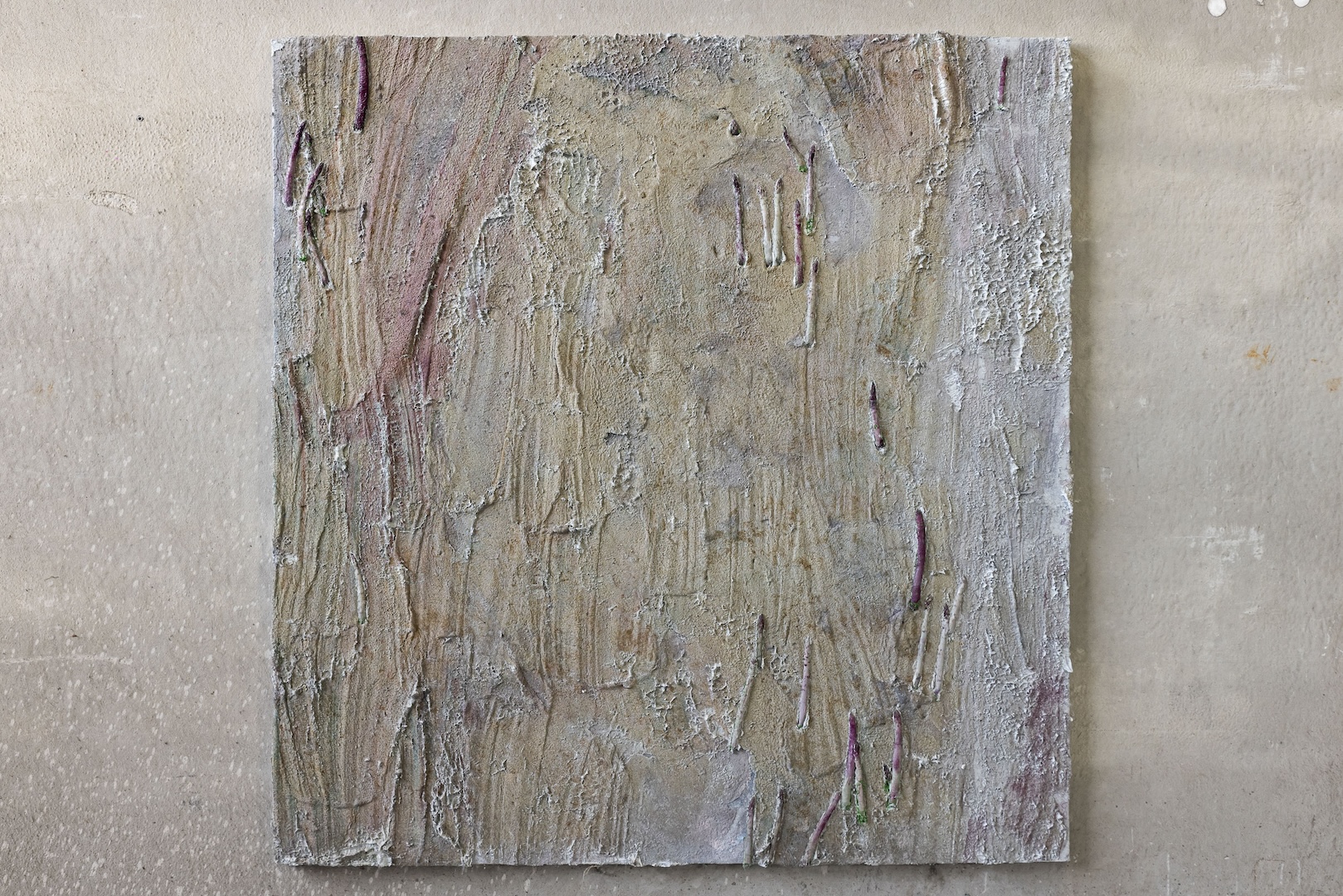
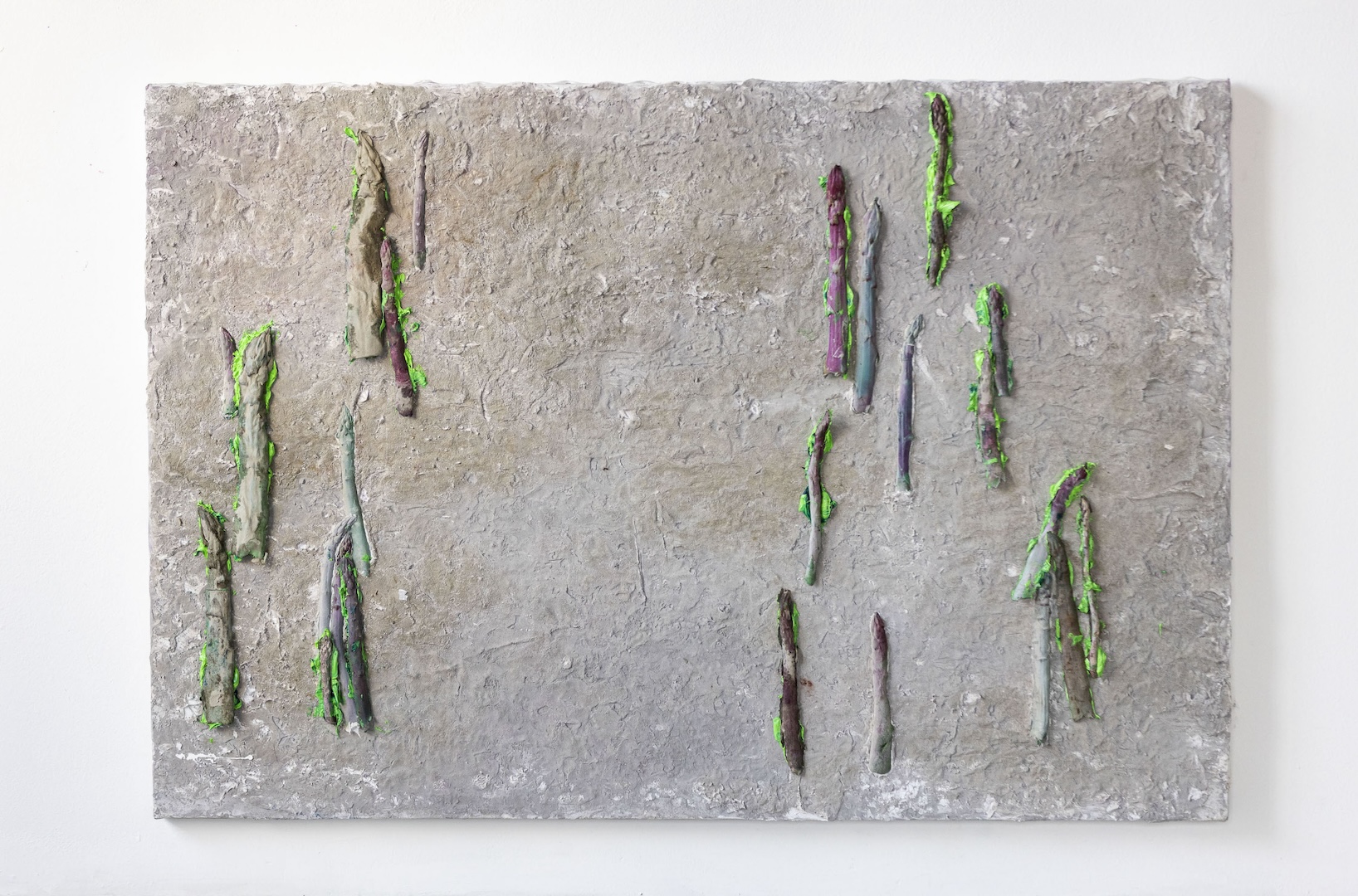
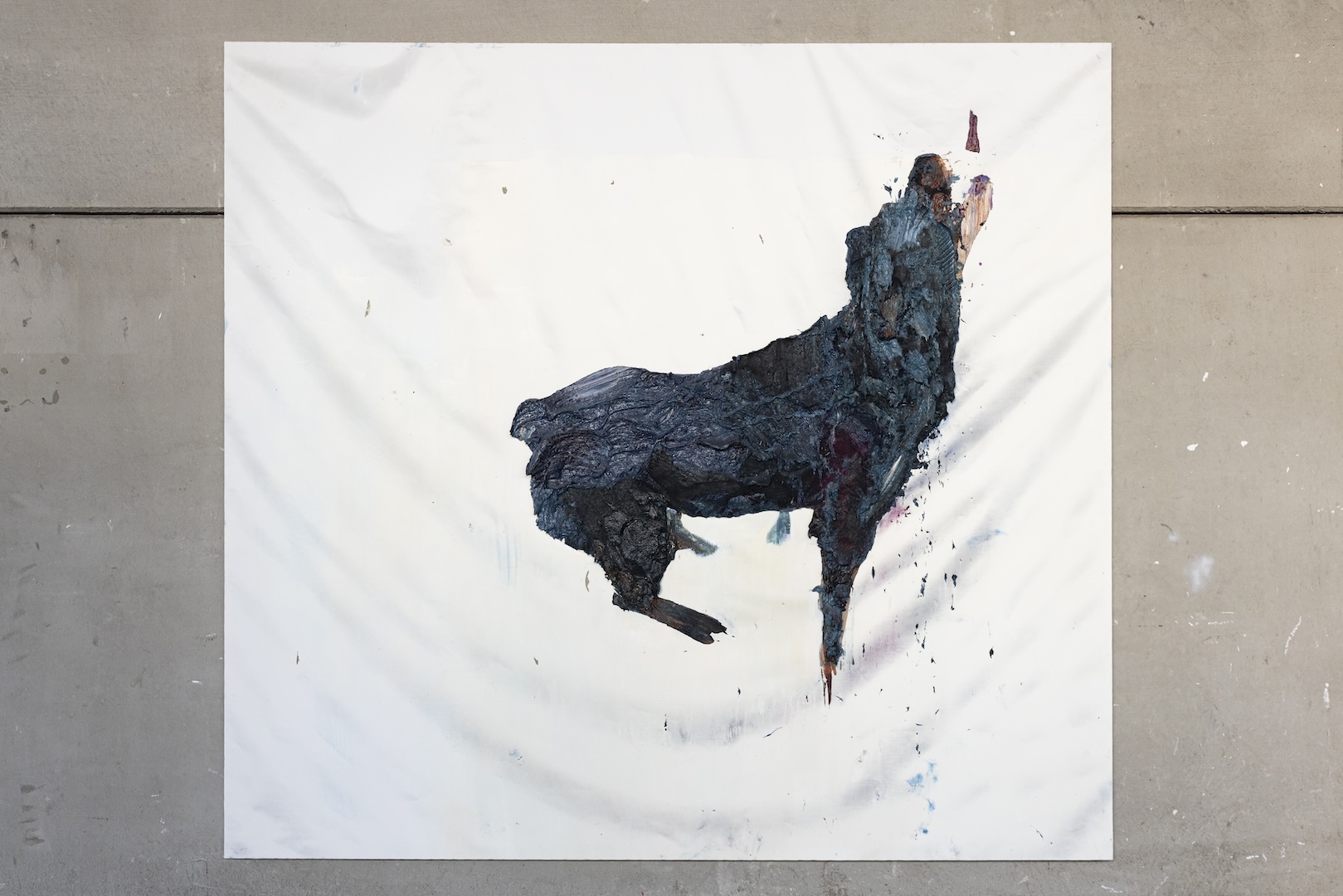
D: Yes, when I sculpt, I throw the clay; in the same way, I throw the paint. My way of working is very instinctive, and I usually think in terms of masses and volumes. The tools I use are often sculptural tools as well — to create the asparagus and tomatoes I use rubber molds, and I mix oil paint with the same mixer I use to soften clay. I’ve even used an angle grinder to smooth hardened paint surfaces. Another element that interests me a lot, which relates to sculpture as a three-dimensional object, is gravity. I’m interested in the gravity of the pictorial mass and the gravity of the subjects I depict. The plant that sprouts tends upward, while the animal tends downward. So in this exhibition, there are forces that oppose each other. I was intrigued by the theme of cultivated plants used for food because it seemed to me a subject strongly tied to human survival, and at the same time, I’m fascinated by the wonder of seeing an asparagus or zucchini flower sprout. As for the painted animals, as with the modeled ones, I begin by focusing solely on the figure; only later do I place the sculptures in the landscape. I started working on backgrounds only after several years, seeking this fundamental relationship in the history of painting between figure and background. It’s natural for me to create animals that appear suspended or in mid-leap — within a confined space that is in no way defined by perspective and becomes matter that is more or less ethereal.
M: I think that’s why the exhibition feels cohesive. The animals don’t seem out of place next to your “vegetable” paintings. It’s as if your small “gardens” fill the void created by the abstraction of the background.
D: Yes, that could be.
M: You often refer to your sculptural works as portraits of real animals that you met in captivity and photographed yourself before reproducing them three-dimensionally. Is it the same for your paintings?
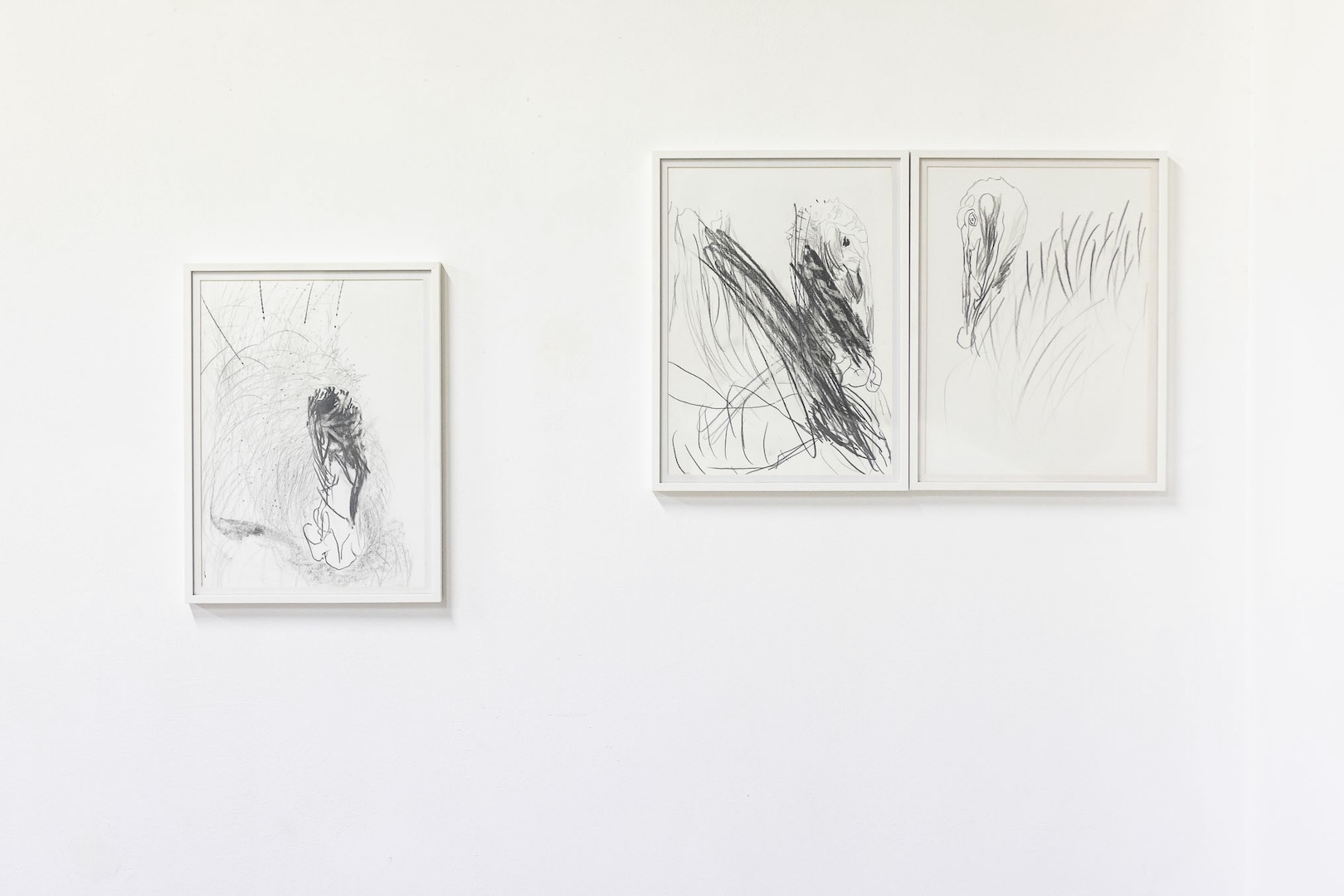
D: Yes, my paintings also always start from a photographic image. All the eagles come from the same photograph, even though they are very different paintings, and the rottweilers from other photos I took over the years. They are studies — of how the figure, animal or vegetable, rests on the ground or is suspended in space.
M: I think it’s worth adding a few words about why we are here — you and I, father and daughter — and specifically at Fuocherello, with one of your painting exhibitions. If it’s okay with you, I’ll start with a couple of premises. It’s been a few years now that we’ve been working together on different projects, and I’d say we make a good team! As for the “why here and now,” it’s worth remembering that Fuocherello was conceived as an exhibition project focused on sculpture. Despite this, after a year and a few months of programming almost entirely devoted to sculpture, I felt a strong need to show painting — and yours, being so sculptural, seemed like the most coherent introduction to our project and to the context in which the gallery is located. What do you think?
D: Yes, Fuocherello is a project born above all out of passion and the desire to conduct research on sculpture. The enthusiasm of Manlio Bonetto, Andrea Tolardo, Piero De Carli, and Philippe Jacopin served as a spark and allowed Fuocherello to become a space for investigating materials and sculptural practices. I believe my painting has a lot to do with these elements — through painting, I fully engage in discourses and reflections on sculpture.
M: I’ve always cared that the gallery focuses especially on young talents. You’re not exactly young anymore, but I’m really fascinated by the idea of showing a side of your artistic practice that is little known. I think this is one of your first exhibitions (if not the very first) consisting exclusively of two-dimensional works. After all, the first show I hosted at Fuocherello as director was a solo exhibition by Emanuele Becheri, following his own “renaissance” as a sculptor.
Davide Rivalta’s garden is made of abstraction. It is a garden where plants and flowers are easily recognizable, almost three-dimensional and realistic, yet they display seemingly improbable colors and are placed in unidentifiable fields, surrounded by animals unrelated to agriculture. The material forms that emerge from his canvases are entirely made of oil paint, then dusted — “fertilized” — with pigment. This brings me back to Pia Pera and the concept of abandonment by the gardener. Davide’s gardens, his orchards, are used to being abandoned and recovered years later. In fact, he prefers sculpture, and due to practical constraints, dedicates very little time to painting. Moreover, the thickness of his paintings results in extremely long drying times. For example, the painting of tomatoes I used for the exhibition’s promotional material has an almost unimaginable weight for a painting of that size and took years to dry. In fact, the day we set it upright to decide on the exhibition layout, one of the tomatoes — like a real fruit past its ripening point — gave way under its own weight and, not being fully dry, fell off. After reattaching the fallen element with oil paint, we said to each other, “Maybe next time,” putting it back once again in its crate, not knowing when the next time would be — or whether, sooner or later, it will withstand the very force of gravity that so fascinates Davide.